Long-Lived Frames
Powder-coated steel and aluminum frames are usually the long-term asset, often remaining serviceable through multiple roof or fabric replacements.
Phoenix Shade Structures Co. explains why shade structure lifespan in Phoenix depends on the frame, canopy material, coatings, and exposure to desert heat, UV, and monsoon winds. Knowing which component ages first helps property owners plan maintenance and replacement before visible wear becomes structural trouble.
Powder-coated steel and aluminum frames are usually the long-term asset, often remaining serviceable through multiple roof or fabric replacements.
Fabric and roof panels absorb the most UV exposure, so re-canopying is routine lifecycle maintenance rather than evidence that the entire structure has failed.
Checking welds, fasteners, footings, coating integrity, and fabric tension before monsoon season helps catch wear before it becomes a safety concern.
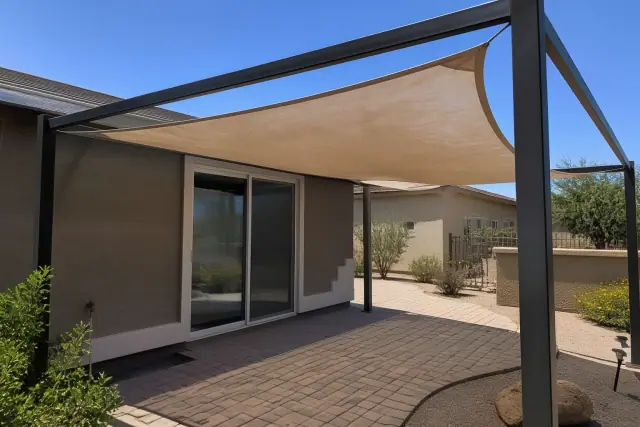
A sound metal frame supporting faded fabric. The contrast explains why the canopy often needs replacement years before the frame.
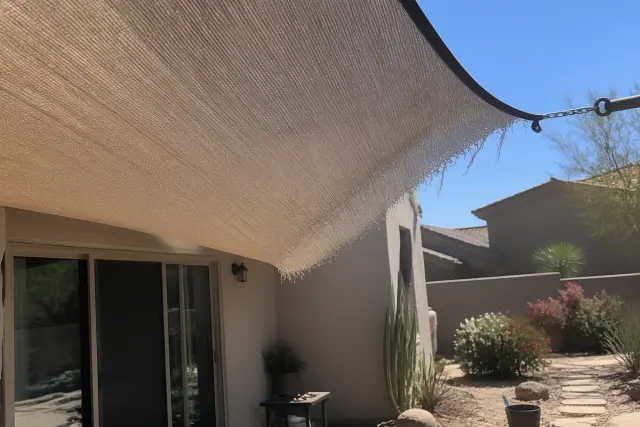
Visible UV wear at seams and a loss of tension. These signs often appear between years 7 and 12 and call for evaluation before monsoon winds arrive.
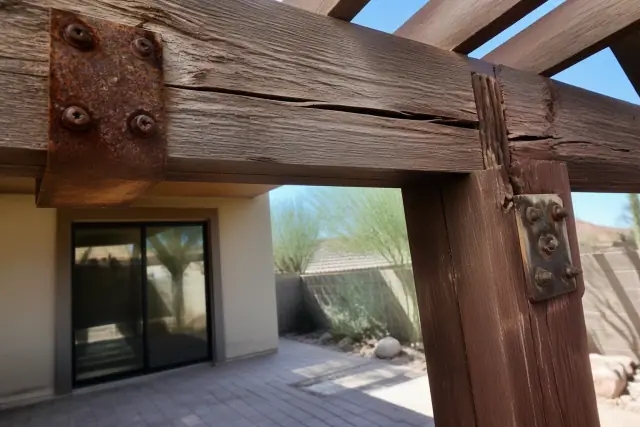
Early frame and footing warning signs at close range. Surface rust, loose anchor bolts, and split joints reveal where maintenance or structural repair should begin.
Aluminum resists rust and typically provides 20-30 years of structural life. Steel offers strong wind-load capacity but depends on an AAMA 2604-rated or better powder-coat finish.
UV-stabilized polycarbonate roofing panels typically last 10-20 years, while vinyl components often need attention within 10-15 years under sustained UV exposure.
Phoenix has more than 100 days a year above 100°F, while extreme UV and July-through-September monsoon gusts accelerate coating, fabric, and anchoring wear.
Re-tension shade sails annually, recoat steel every 8-10 years, and reseal wood every 2-3 years to slow avoidable deterioration.
| Structure | Typical Lifespan | Lifecycle Note |
|---|---|---|
| Pergola | Wood: 10-20 years; aluminum or steel: 20-30 years | Wood species, sealant care, and powder-coated metal finishes change the interval. |
| Ramada or louvered roof | 25-30+ years | Steel, masonry, or extruded aluminum frames are among the longest-lived options. |
| Patio cover, carport, or metal awning | Metal covers and awnings: 20-25 years; carport frames: 20-30 years | A carport roof panel may need replacement around 15-20 years. |
| Shade sail | Fabric: 5-15 years; quality HDPE commonly: 8-12 years | The supporting steel or aluminum frame often lasts 20+ years. |
| Cantilever shade | Frame: 20-25 years; fabric: 10-15 years | Plan for a canopy replacement before a frame replacement. |
| Playground shade | Frame: 15-20 years; fabric: around 10 years | Constant sun exposure over play equipment shortens canopy life. |
A shade structure does not age as one unit: the frame, fasteners, roof, and fabric each have different replacement cycles. An ASCE 7-engineered steel ramada frame can outlast three or four shade-sail replacements, and steel or aluminum frames often last two to three times longer than fabric or wood components. Commercial-grade steel-and-fabric systems frequently reach 15-20 years or more before a major component replacement.
Untreated steel exposed to irrigation overspray or monsoon humidity can show surface rust within 5-7 years, while improperly sealed wood may crack and split within 8-10 years. Shade sail fabric often shows fading, thinning, or seam fraying between years 7 and 12 as UV exposure reduces tensile strength. Structures left without inspection for 5+ years show measurably higher rates of early fastener failure and fabric tearing.
Repair or replace? Re-canopying is usually appropriate when the frame has no rust-through, cracked welds, compromised footings, wood rot, or wind damage; those structural problems can make full replacement necessary. How often should it be checked? Inspect welds, fasteners, footings, tension, and coatings annually, ideally before monsoon season begins in July. What does a commercial structure cost? The structure itself generally runs $5,000 to $50,000, depending on square footage, material grade, span, and site-specific wind-load engineering. Do permits matter? City of Phoenix Planning and Development Department review and ASCE 7 wind-load calculations help prevent the early failures associated with under-engineered structures.
If fabric is fading, sagging, or fraying, or the frame shows rust bloom, cracked welds, loose anchors, or split wood, request an inspection before monsoon season. A frame-first assessment can separate routine re-canopying or maintenance from full structural replacement.