Proudly serving Phoenix, Scottsdale, Mesa, Glendale, Chandler, Gilbert & surrounding areasCall or Text 24/7: 602-507-9963
Elevated view of a residential suburban neighborhood with desert landscaping in Phoenix, AZ.

Playground Shade Structures, School & Park Safety Canopies in Phoenix, AZ

Phoenix Shade Structures Co. designs, fabricates, and installs playground shade structures for schools, daycares, parks, HOAs, and municipal facilities in Phoenix. Our playground options include pergolas, ramadas, shade sails, cantilever structures, and adjustable louvered roofs. We also build commercial shade structures for gathering areas where children, families, and staff need dependable sun protection. Each recommendation is shaped around the play-equipment layout, sun path, soil conditions, and required coverage.

Unshaded playground equipment in Phoenix can exceed 150 degrees Fahrenheit on summer afternoons, creating a contact-burn risk within seconds. The city also experiences well over 100 days a year with highs above 100 degrees, so shade is essential to practical playground use. We design for Arizona heat and wind loads instead of adapting an off-the-shelf canopy after the fact. Arizona Registrar of Contractors licensing and project-specific engineering support a clear path from site walk through final inspection.

Commercial HDPE knitted fabric can block 90 to 98 percent of UV radiation, while powder-coated steel and aircraft-grade aluminum provide durable framing. Commercial playground designs account for ASTM F1487 clearances and local wind-load specifications for monsoon gusts that regularly exceed 60 mph.

Phoenix Shade Structures Co. installs playground shade structures in Phoenix and nearby Scottsdale, Tempe, Mesa, Chandler, and Glendale.

★ ★ ★ ★ ★4.9/5 Customer Rating · 31 Years of Trade Experience · Thousands of Projects Completed · Licensed, Bonded & Insured · Serving Homes, Businesses & Communities

Phoenix Playground Shade Options & Benefits

What Are Playground Shade Structures?

Playground shade structures are engineered canopies positioned over play equipment, seating, picnic areas, or gathering zones to reduce direct sun exposure. The structure can use an open pergola, a solid-roof ramada, tensioned fabric sails, a cantilevered canopy, or an adjustable louvered roof.

The right layout depends on where shade falls during the hours children use the site, not just the canopy footprint at noon. Post placement, equipment clearances, drainage, soil, wind exposure, and desired coverage all influence the design.

Phoenix guidance recommends 100 percent shade over play structures and 75 percent coverage for pools, play zones, and picnic areas. We use those coverage goals alongside site conditions and budget to select a practical system without over-building the project.

Benefits of Professional Playground Shade

A properly placed structure makes outdoor play more usable while addressing the heat, UV, wind, and clearance conditions specific to a Phoenix site. Material and roof choices can prioritize airflow, rain coverage, low upkeep, or adjustable light control.

  • Reduces direct solar heating on slides, rails, and swings
  • Blocks 90 to 98 percent of UV radiation with selected HDPE fabric
  • Targets full equipment coverage and shaded adjacent activity zones
  • Provides complete rain coverage when a solid ramada roof is selected
  • Keeps air moving through breathable knitted shade-sail fabric
  • Makes play and gathering areas more practical through Phoenix summers
  • Fits posts and canopy geometry around existing equipment
  • Uses wind-load engineering for desert storm conditions
Playground Shade Services

Commercial Playground Shade Services

We plan shade around the way each playground operates, from school recess schedules and smaller daycare yards to public parks and municipal bid requirements. Design, fabrication, engineering documentation, permitting, installation, and final adjustments stay coordinated around the selected structure.

School Playground Shading

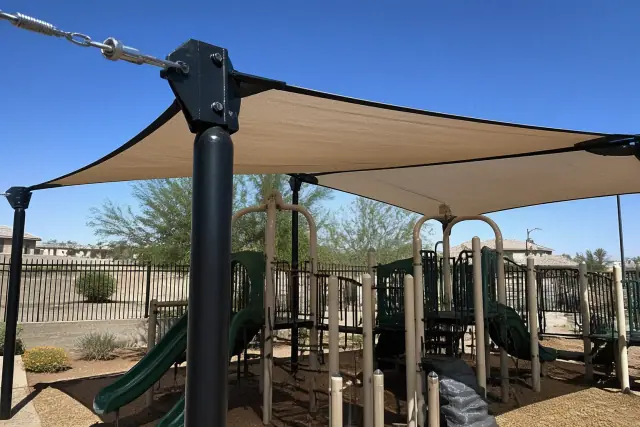
Newly installed shade canopy over a playground with steel support posts and tension cables in Phoenix, AZ.

We work with school facilities teams to size shade for recess schedules and place priority coverage over climbing structures and slides where children spend time and equipment temperatures climb. Designs maintain ASTM F1487 playground clearances while fitting district planning and budget cycles.

Request Estimate

Daycare Shade Structures

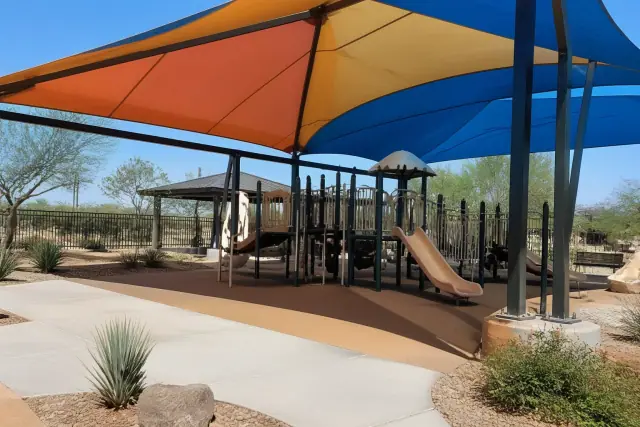
Fabric shade structures over playground equipment at a park in Phoenix, AZ.

Daycare playgrounds often need high UV protection within compact fenced yards used by younger children. We can specify fabric near the 98 percent UV-blocking threshold and use lower-profile layouts that fit in-home and center-based daycare sites across Phoenix.

Request Estimate

Phoenix Park Shade Structures

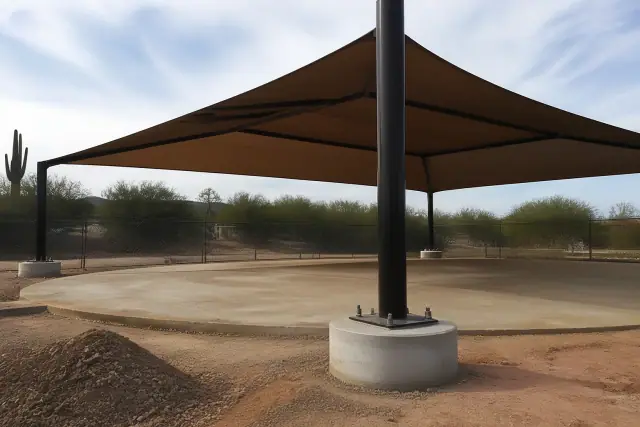
Steel shade structure with industrial bolts in a desert playground in Phoenix, AZ.

Park retrofits can add sails or ramadas over older playgrounds as part of broader heat-mitigation work. These public-use structures pair commercial-grade framing with vandalism-resistant hardware and planning for municipal inspection cycles.

Request Estimate

Municipal Playground Protection

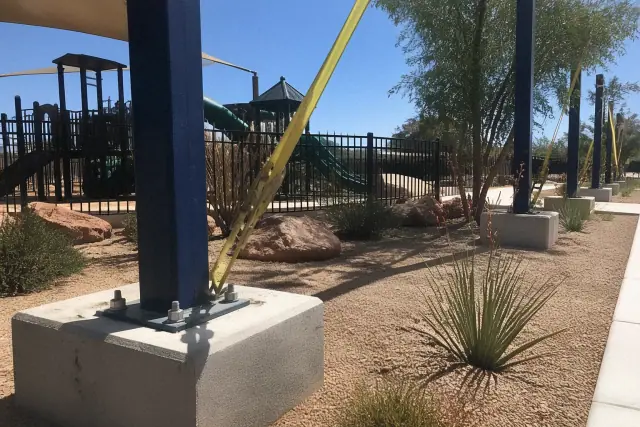
Steel mounting plates and tensioning straps on a playground shade structure installation in Phoenix, AZ.

City and county projects often require prevailing-wage documentation, bonded-contractor requirements, and structural drawings stamped by an Arizona-licensed engineer. We coordinate that bid-package documentation and build to the same commercial-grade specification used for public playground ownership.

Request Estimate

HOA Playground and Picnic Shade

Fabric shade structure over a playground with climbing equipment in a fenced park in Phoenix, AZ.

HOA sites can combine equipment coverage with shade over picnic tables and shared gathering areas. We compare solid roofs, fabric sails, and partial pergola coverage against the community's layout, design-review needs, and desired rain protection.

Request Estimate

Custom Playground Shade Design

Custom playground shade structure with tensioned fabric and steel connectors at a park in Phoenix, AZ.

Custom post spacing, sail geometry, and roof pitch let the shade follow the equipment and actual sun exposure instead of forcing the site into a stock canopy footprint. The result is a structure designed around useful coverage, safe clearances, airflow, and local soil conditions.

Request Estimate
Playground Coverage Options

Types of Playground Shade Structures

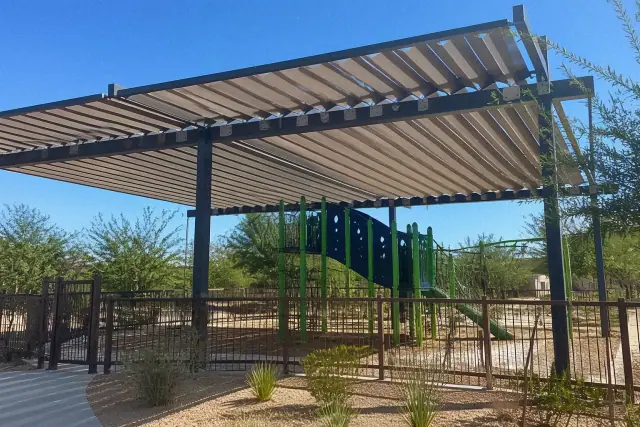
Pergolas, ramadas, shade sails, louvered roofs, and cantilever structures solve different coverage needs. Comparing shade density, roof behavior, span, airflow, framing material, and maintenance makes it easier to match the structure to the play area.

Pergola shade structure installed over climbing equipment at a public playground in Phoenix, AZ.

Pergola Shade Structures

Pergolas create partial, dappled shade suited to seating and gathering areas beside playground equipment. Phoenix sites can choose modern aluminum lines or a rustic wood-look design to complement the surrounding park or campus.

  • Partial shade for adjacent seating areas
  • Modern aluminum or traditional wood-look styling
  • Open construction that supports airflow
  • Custom post spacing for the site layout
  • Best suited beside equipment rather than over it
Request Estimate
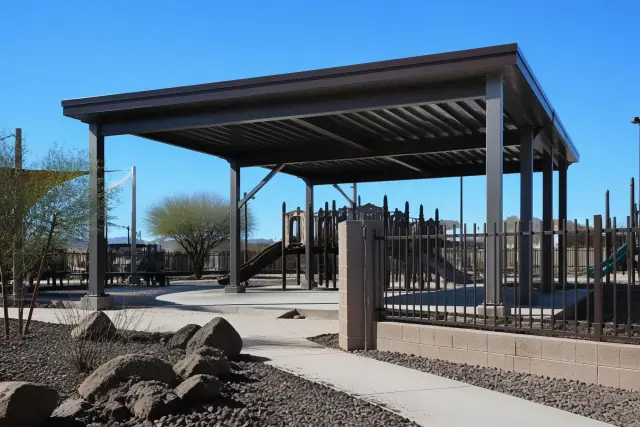
Solid-roof playground shade structures with steel posts at a public park in Phoenix, AZ.

Solid-Roof Ramadas

Ramadas provide full sun and monsoon-rain coverage over play equipment, picnic tables, and gathering areas. Steel or aluminum framing supports standing-seam metal roofing engineered to resist wind uplift.

  • Complete overhead sun coverage
  • Solid roofing that sheds monsoon rain
  • Steel or aluminum structural framing
  • Standing-seam metal roof options
  • Wind-uplift engineering for Phoenix conditions
Request Estimate
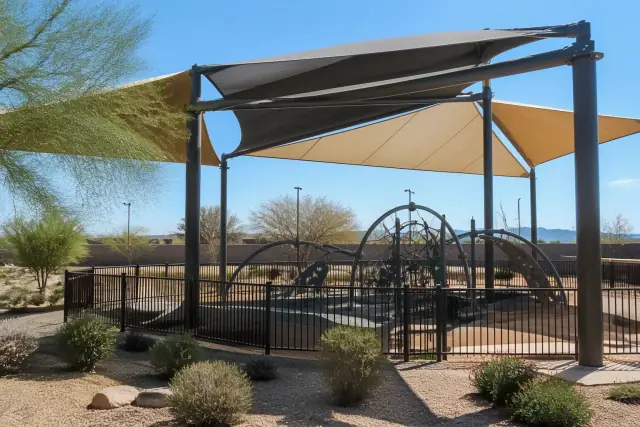
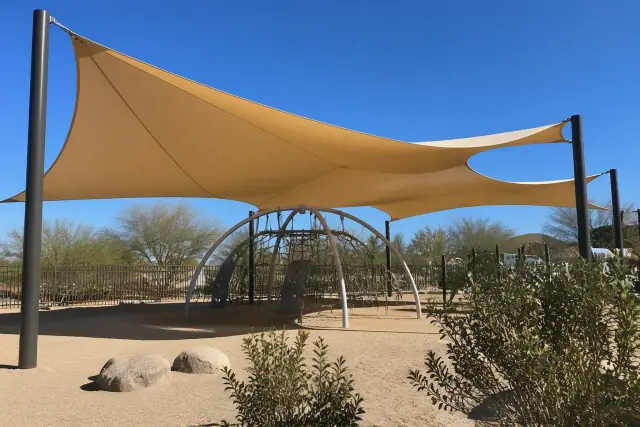
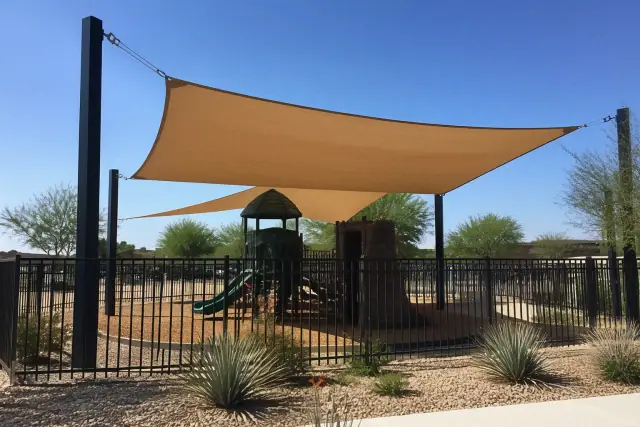
Tensioned fabric shade sails over a playground in Phoenix, AZ, with steel support posts and desert landscaping.

Tensioned Shade Sails

Shade sails use tensioned HDPE fabric between engineered steel posts to cover irregular play areas efficiently. Multiple sails can be layered at different heights and angles to improve coverage while preserving airflow below.

  • Flexible geometry for irregular playgrounds
  • Knitted HDPE fabric that lets air pass through
  • Layered heights and angles for better coverage
  • Engineered steel support posts
  • Sun protection without waterproof coverage
Request Estimate
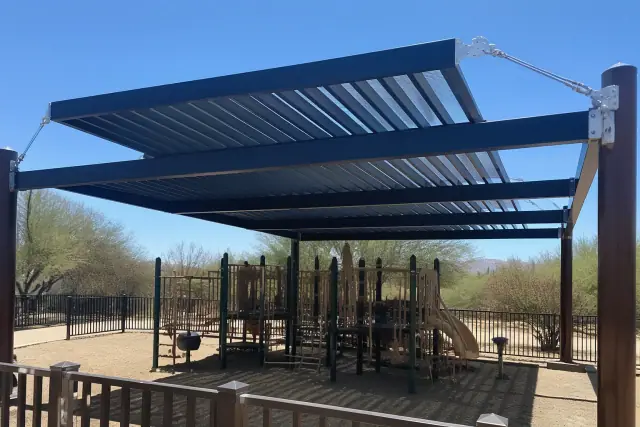
Adjustable louvered shade structure over a children's playground in Phoenix, AZ.

Adjustable Louvered Roofs

Louvered roofs give facility managers seasonal control over light, airflow, and rain coverage. The louvers can close during a monsoon downpour and open for greater ventilation during milder shoulder seasons.

  • Adjustable roof pitch
  • Seasonal control of sunlight
  • Open configuration for ventilation
  • Closed configuration for rain protection
  • Suitable for high-use commercial sites
Request Estimate
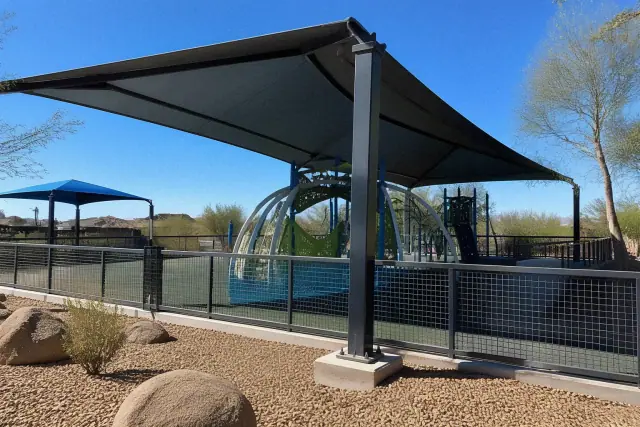
Cantilever shade structure over playground climbing equipment in a Phoenix, AZ park with concrete footings.

Cantilever Shade Structures

Cantilever structures are a custom coverage option for playground sites where canopy geometry and post placement must work around equipment. We size the framing, footings, and coverage to the site rather than relying on a catalog template.

  • Custom canopy geometry
  • Post placement coordinated with equipment
  • Steel or aluminum framing selected for the span
  • Engineered footings for soil conditions
  • Coverage shaped around the actual sun path
Request Estimate
Finding Your Right Fit

Choosing the Right Playground Shade Approach

Start with the type of coverage the playground needs: partial shade, full sun and rain protection, flexible fabric coverage, or adjustable control. Then compare equipment clearances, post locations, roof span, airflow, soil, wind exposure, maintenance, and budget before settling on the structure.

Site-Specific Shade Design

We map sun angles at different times of day, measure the equipment layout, and check soil conditions before recommending a system. That work directs shade toward the equipment and activity zones that need it instead of treating the canopy footprint as the only design goal.

Arizona Engineering and Permits

Permanent Phoenix shade structures require a building permit through the City of Phoenix Planning and Development Department. We prepare stamped engineering drawings, submit the permit package, coordinate inspections, and address locally adopted International Building Code wind-load provisions.

Desert-Ready Materials

Powder-coated or hot-dip galvanized steel delivers load capacity for large spans, while aluminum offers lower weight, corrosion resistance, and no repainting over its service life. Knitted HDPE fabric avoids the wind ballooning associated with solid vinyl membranes and helps retain airflow below the canopy.

What Sets Us Apart

Why Choose Us for Playground Shade Installation?

Phoenix Shade Structures Co. brings site assessment, custom fabrication, commercial materials, engineering coordination, permitting, and installation into one project path. You can review structure type, coverage percentage, material choices, and cost drivers before committing to a design.

Request Site Assessment

Burn-Hot Playground Surfaces

Metal slides, handrails, and chain swings absorb radiant heat and can remain hot after direct sun moves away. During peak summer conditions, unshaded metal surfaces at Phoenix parks have reached temperatures capable of causing contact burns in under a minute.

Extreme UV Exposure

Arizona's elevation and frequent clear skies push the UV index into the extreme range for much of the year. Children can burn faster than adults, and repeated unprotected exposure accumulates across recess periods and a school year.

Insufficient Shade Coverage

A canopy can look large on paper yet miss slides, climbers, or picnic zones during the hours they are used. Sun-path mapping and layered shade geometry help close those gaps and support the city's equipment and activity-zone coverage recommendations.

Monsoon Wind Loads

Phoenix's monsoon season runs roughly June through September and brings dust storms, intense short-duration rain, and strong gusts. The frame, fabric tension, roof connections, and footings must be engineered together for the applicable local wind load.

Caliche Footing Conditions

Hard caliche layers can require footings deeper than a standard residential depth. The structural engineer specifies footing depth from the site conditions so the installed posts and canopy loads have the intended support.

Fabric and Hardware Wear

Shade fabric typically lasts 10 to 15 years before UV degradation calls for replacement, while steel or aluminum framing commonly lasts 20 years or more with minimal upkeep. Annual fabric-tension and hardware inspections, especially after monsoon season, can identify wear before it becomes a safety concern.

How It Works

Our Playground Shade Process

A six-step process connects playground use, shade coverage, engineering, permits, construction, and closeout. Each decision is documented before the next phase so the selected canopy fits the site and its operational needs.

01.

Walk the Playground Site

We measure the existing equipment layout, observe sun angles at relevant times, and check soil and access conditions. The walk also clarifies which play and gathering zones need priority coverage.

02.

Select Coverage and Structure Type

We compare pergolas, ramadas, sails, cantilevers, and louvered roofs against the coverage percentage, airflow, rain protection, and budget goals. Framing and roof materials are selected for the chosen span and use.

03.

Engineer the Shade Structure

Project drawings address structural loads, footing design, post locations, and playground clearances. Commercial designs also coordinate the applicable ASTM F1487 and locally adopted wind-load requirements.

04.

Submit Permits and Schedule Inspections

We prepare the stamped engineering package, submit the building-permit documents, and coordinate required inspection dates. HOA design review or municipal bid documentation can be incorporated when the site calls for it.

05.

Build Footings, Frame, and Canopy

Footings are drilled and set to the engineer's specified depth before the concrete cures. Crews then erect the frame, install the metal roof or fabric membrane, and torque structural connections to specification.

06.

Inspect and Adjust the Installation

The final walk checks sail tension, ramada drainage, connection torque, and the finished coverage. We resolve adjustments identified during the city's final inspection before closing the permit.

Plan Your Playground Shade

Schedule a Playground
Shade Site
Consultation

Request an on-site walk to compare coverage types, materials, and cost drivers for your Phoenix playground. We can explain how equipment layout, soil, engineering, permitting, footing depth, and roofing or fabric choices shape the project before you select a design.

Playground Shade Help

Playground Shade Structure FAQs

These answers cover Phoenix permits, structure selection, cost, UV protection, weather performance, materials, and maintenance. A site assessment can narrow the choices to the equipment layout and coverage your playground needs.

Call Our Shade Team

Permanent shade structures require a building permit through the City of Phoenix Planning and Development Department and must meet locally adopted International Building Code wind-load provisions. HOA review may add height, roofline, and setback requirements, while commercial playgrounds must preserve ASTM F1487 safety clearances. We handle engineering documents, permit submission, and inspection scheduling for commercial projects.

Common options are pergolas for partial shade, ramadas for full solid-roof coverage, shade sails for flexible irregular layouts, cantilever canopies for site-specific post placement, and louvered roofs for adjustable control. The right choice depends on equipment layout, sun angles, desired coverage, airflow, rain protection, and budget.

Standard commercial playground installations generally run $3,000 to $15,000. Larger multi-bay ramadas or complex sail arrays can reach $20,000 to $30,000. Size, frame material, roof type, footing depth, engineering, permits, and site preparation influence the final quote.

Shade sails are typically toward the lower end of the $3,000 to $15,000 standard commercial playground project range and often cost less than a ramada for comparable coverage. The number of sails, post height and material, fabric grade, UV-blocking rating, footing conditions, and coverage geometry all affect pricing.

Commercial-grade HDPE knitted fabric can block between 90 and 98 percent of UV radiation, depending on its density and color. Darker fabrics generally block more UV but can feel hotter to the touch, so material selection balances protection with conditions below the canopy.

HDPE playground shade-sail fabric is not waterproof by design. Its knitted construction supports airflow, while solid-roof ramadas and closed louvered roofs provide complete rain coverage when dry space is a priority.

Shade fabric typically lasts 10 to 15 years before UV degradation requires replacement. Steel or aluminum framing commonly lasts 20 years or more with minimal upkeep, depending on the installation and ongoing condition.

Aluminum resists corrosion, weighs less, and needs no repainting over its service life, making it useful for pergolas and lighter sail supports. Steel carries higher loads for large-span ramadas and cantilever structures, so wind exposure, roof span, and footing requirements guide the choice.

Fixed ramadas, pergolas, and sails are usually the practical choice for public playgrounds because they have no motors or moving parts and resist heavy public use. Motorized retractable systems are better suited to private patios and commercial dining areas where seasonal flexibility outweighs added maintenance.

Plan an annual fabric-tension and hardware inspection, with particular attention after monsoon season. The check should look for fabric wear, loose connections, drainage issues on solid roofs, and any adjustment needed to keep the structure performing as designed.

Shade structures can be designed for school playgrounds, daycare yards, municipal parks, HOA recreation areas, picnic zones, and other commercial play spaces. Each setting changes the priorities for coverage, clearances, material durability, rain protection, and documentation.

We map sun angles at different times of day, measure the equipment layout, review soil and access conditions, and identify the zones that need priority shade. Those findings help compare structure types, coverage percentage, post placement, materials, and budget before design work moves ahead.

Playgrounds vary in equipment position, sun exposure, soil, and safe post locations. Custom post spacing, sail geometry, and roof pitch direct coverage toward the parts of the site that matter rather than forcing the playground into a standard canopy footprint.