Proudly serving Phoenix, Scottsdale, Mesa, Glendale, Chandler, Gilbert & surrounding areasCall or Text 24/7: 602-507-9963
Elevated view of a residential suburban neighborhood with desert landscaping in Phoenix, AZ.

Shade Sail Installation, Fabric Canopy & UV Protection Systems in Phoenix, AZ

Phoenix Shade Structures Co. installs custom shade sails for homes and businesses in Phoenix, Arizona. We design coverage for patios, driveways, pools, playgrounds, parking areas, and commercial outdoor spaces. Our team also builds pergolas, ramadas, patio covers, carports, louvered roofs, cantilever systems, and metal awnings when a different structure better fits the property. Each recommendation starts with the space, the available anchor points, and the shade needed during peak afternoon hours.

Phoenix records over 100 triple-digit days a year, and pavement and patio surfaces can pass 150 degrees on peak days. Shade sails must also withstand monsoon gusts that regularly exceed 50 mph. We size posts, footings, tension, and anchor points for the site's exposure instead of treating the fabric like a decorative canopy. A site walk gives you clear guidance on whether a sail, ramada, patio cover, or louvered roof is the right approach.

Our installations use knitted HDPE fabric rated to block roughly 90 to 95 percent of UV radiation and marine-grade 316 stainless steel hardware. Crews are licensed through the Arizona Registrar of Contractors and carry the insurance coverage required by commercial property managers and HOAs. Designs account for wind-load standards referenced by the International Building Code as adopted by the City of Phoenix Development Services Department.

Phoenix Shade Structures Co. provides shade sail installation in Phoenix and the surrounding communities of Scottsdale, Tempe, Mesa, Chandler, Glendale, and Peoria.

★ ★ ★ ★ ★4.9/5 Customer Rating · 31 Years of Trade Experience · Thousands of Projects Completed · Licensed, Bonded & Insured · Serving Homes, Businesses & Communities

Shade Sail Options & Benefits

What Is Professional Shade Sail Installation?

Professional installation begins by mapping the footprint, seasonal sun angles, and usable structural anchor points. The design may use a triangle, square, or overlapping multi-sail geometry to put shade where it matters from the summer solstice through winter.

The support system is engineered around local soil, post height, span, and cumulative wind load. Concrete footings, structural attachments, cable, turnbuckles, and fabric tension must work together when Phoenix heat reaches 115 degrees and monsoon winds arrive.

Commercial-grade knitted fabric is tensioned to eliminate slack and flutter without overstressing seams or D-rings. With quality material, correct tension, and occasional cleaning, shade fabric typically lasts 10 to 15 years before replacement.

Benefits of Shade Sail Installation

A well-designed shade sail turns exposed hardscape into usable outdoor space while keeping the structure visually light. Geometry, material, pitch, and tension can be tailored to residential or commercial coverage needs.

  • Creates practical shade during peak afternoon hours
  • Blocks roughly 90 to 95 percent of UV radiation with rated HDPE fabric
  • Fits triangle, square, and overlapping multi-sail layouts
  • Protects parked vehicles from direct desert sun exposure
  • Uses corrosion-resistant 316 stainless steel cable and fittings
  • Allows pitched waterproof fabric to shed monsoon rain
  • Installs faster and costs less per square foot than a pergola or ramada
  • Can be dropped before a major storm when the design allows
Residential & Commercial Coverage

Phoenix Shade Sail Services

Coverage is designed around how each property is used, from a backyard dining area to an open commercial parking lot. The following services address the most common residential, school, HOA, hospitality, and business applications in Phoenix.

Patio Shade Sail Installation

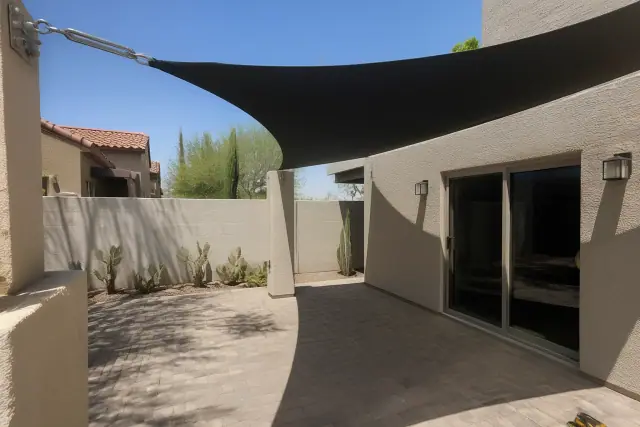
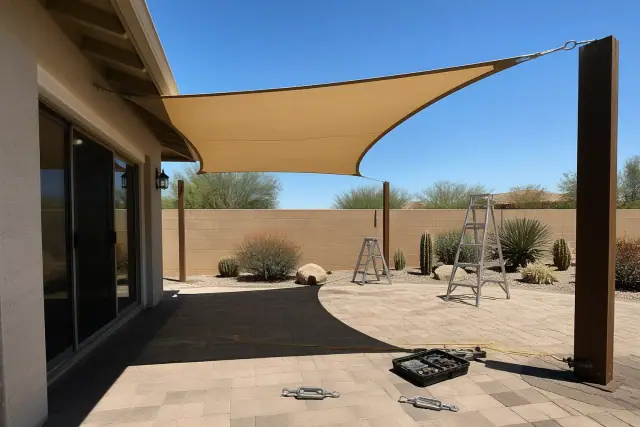
Patio shade sail installation in progress over a stone patio in Phoenix, AZ with desert landscaping.

Patio sails are positioned to block direct afternoon sun without trapping heat over dining and lounge areas. Careful anchor placement clears existing structures and helps Phoenix homeowners use outdoor living spaces from May through September.

Request Estimate

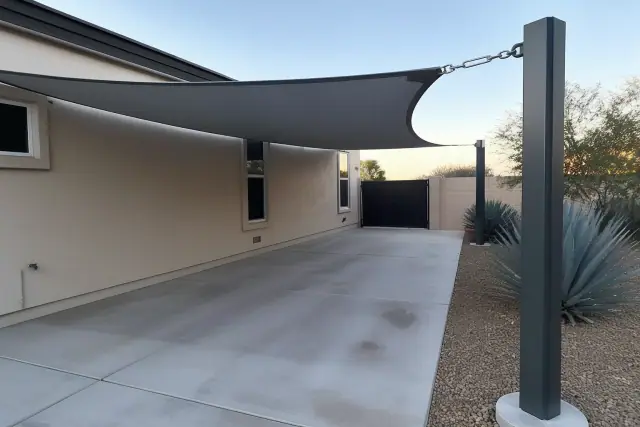
Driveway Shade Sail Installation

Triangular shade sail installed over a residential driveway in Phoenix, AZ with visible tensioning hardware.

Driveway sails reduce direct sun exposure that accelerates dashboard and paint damage. Systems can use dedicated posts or verified structural walls and can be sized for one or multiple vehicles.

Request Estimate

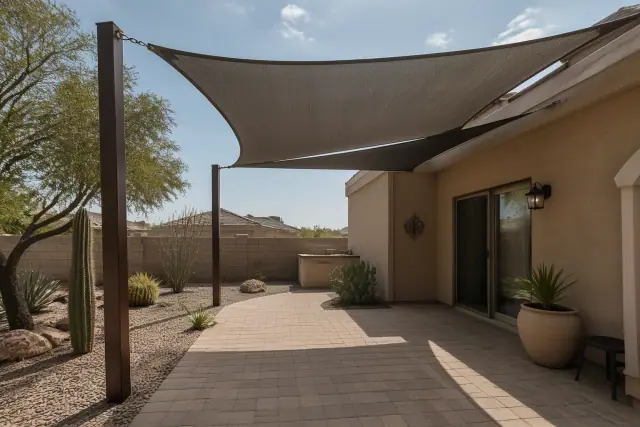
Pool and Backyard Shade Sails

Tensioned shade sails installed over a paved patio at a home with xeric landscaping in Phoenix, AZ.

Shade over pool decks and backyard gathering areas reduces exposure to heat radiating from hard surfaces. Waterproof, fade-resistant fabric can be pitched so stormwater moves to a drainage corner instead of collecting above the space.

Request Estimate

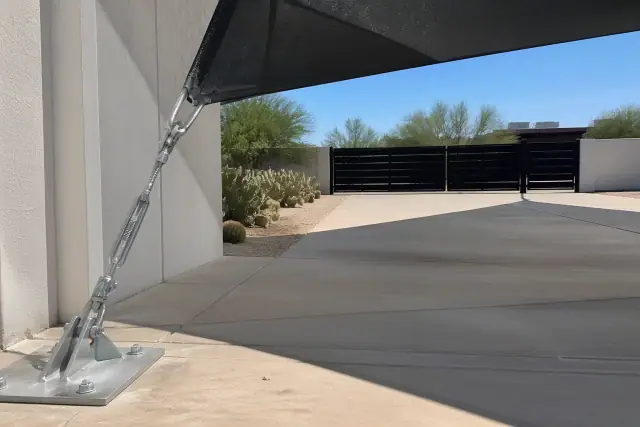
Commercial Parking and Patio Shade

Heavy-duty shade sail anchor plate installed on a concrete parking pad at a property in Phoenix, AZ.

Tensioned sail carports and outdoor-space structures serve fleet lots, retail centers, restaurants, hotels, event venues, and multi-tenant properties. Designs account for higher exposure over open lots, ADA considerations, approvals, existing architecture, and the intended equipment or seating footprint.

Request Estimate

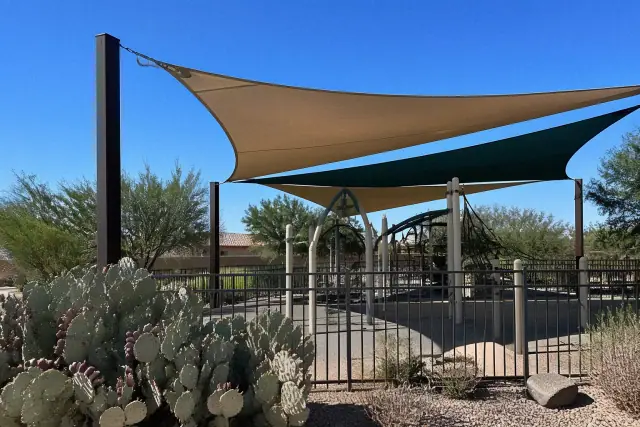
Playground Shade Structures

Completed shade sail installation over playground equipment in a desert park in Phoenix, AZ.

Schools, HOA parks, and municipal facilities use engineered shade structures to cover play-equipment footprints and high-traffic areas. Full-coverage planning matters because unshaded playground equipment can become hot enough to cause burns within seconds.

Request Estimate

Waterproof Shade Sail Installation

Waterproof shade sail installed over a paved patio with desert landscaping in Phoenix, AZ.

PVC-laminated waterproof fabric provides a patio-cover alternative for outdoor dining and living spaces that need rain protection as well as reduced heat and glare. The sail geometry includes enough pitch to shed water safely during monsoon downpours.

Request Estimate
Materials & Structure Choices

Types of Shade Structure Options

The right option depends on whether the priority is airflow, rain protection, an open footprint, adjustable sun control, or permanent roofing. Material, geometry, maintenance, approval needs, and anchor conditions all shape the recommendation.

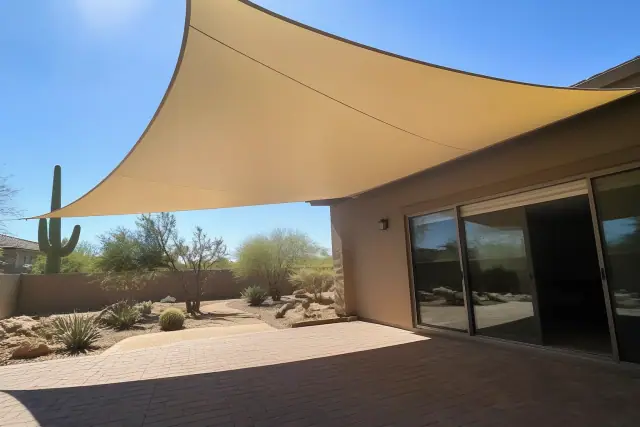
Knitted HDPE shade sails installed over a paved patio in Phoenix, AZ, with desert landscaping and sunlight.

Knitted HDPE Shade Sails

Commercial-grade knitted HDPE is the standard choice for UV protection with airflow through the fabric. Correct tension helps it stay smooth through heat cycling and wind exposure.

  • Roughly 90 to 95 percent UV blockage
  • Knitted construction that allows some water through
  • Triangle, square, or custom multi-sail geometry
  • Manufacturer-specified tension to control flutter
  • Typical 10- to 15-year fabric service life
Request Estimate
Waterproof PVC shade sails installed over a paved patio in Phoenix, AZ, with xeriscaped desert landscaping.

Waterproof PVC-Laminated Sails

Waterproof fabric adds rain protection for patios and dining spaces while continuing to cut heat and glare. Pitch and drainage planning are essential during the July through September monsoon season.

  • PVC-laminated fabric for rain shedding
  • Angled geometry that moves water to a corner
  • Reduced heat and glare below the sail
  • Useful coverage for outdoor dining and lounge areas
  • Tensioning that prevents pooling and excess anchor load
Request Estimate
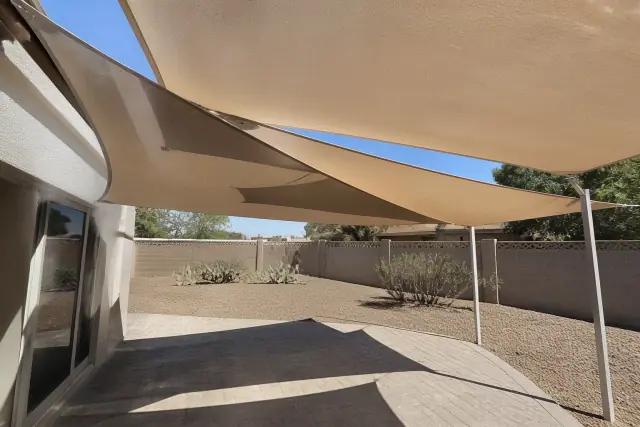
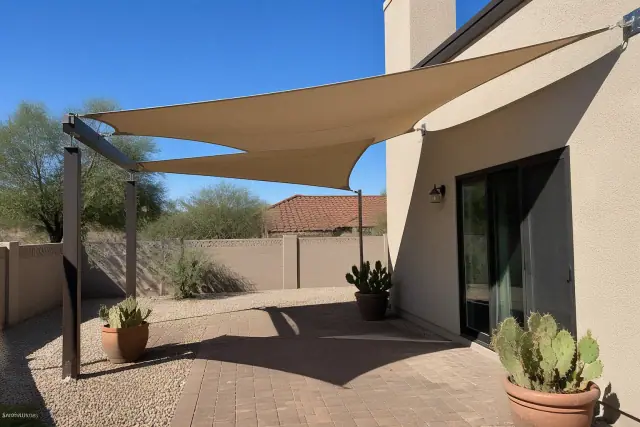
Overlapping multi-sail shade system installed over a stone patio in Phoenix, AZ with cacti in the background.

Overlapping Multi-Sail Systems

Multiple sails can cover larger or irregular patios, pool decks, playgrounds, and commercial areas. Overlap, height, and angle are coordinated across the complete system rather than treating each sail as a separate project.

  • Flexible coverage for large or irregular footprints
  • Overlapping geometry for broader shade
  • Coordinated post heights and anchor positions
  • Wind load distributed across the complete layout
  • Custom shape, color, and angle choices
Request Estimate
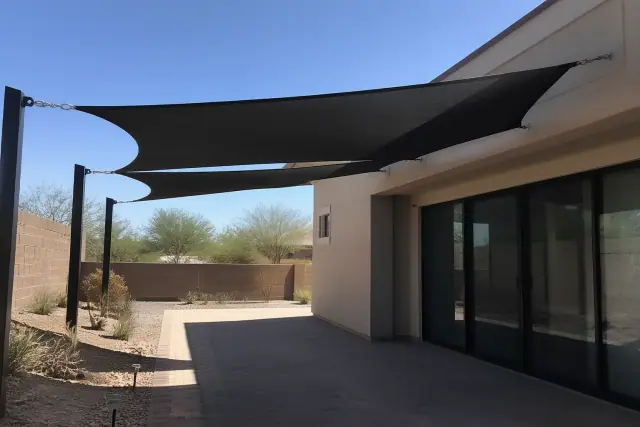
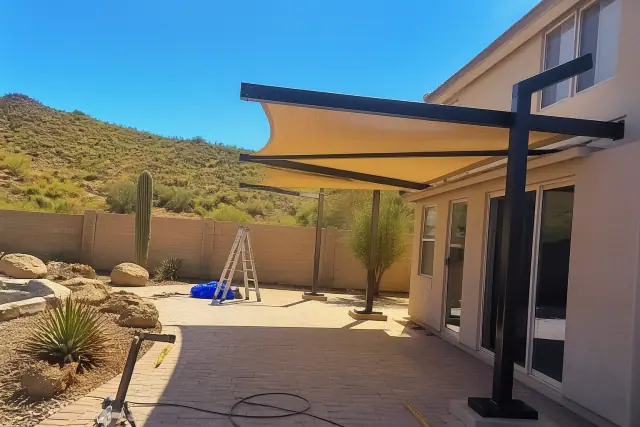
Cantilever shade structures over a residential patio in Phoenix, AZ with desert landscaping.

Cantilever Shade Structures

Cantilever systems move support posts outside the covered activity area. They are especially useful beside pools and patios where a post cannot sit inside the desired footprint.

  • Open space beneath the coverage area
  • Useful placement along pool and patio edges
  • Dedicated structural posts outside the footprint
  • Engineered footings for the offset load
  • Sun-angle planning for targeted shade
Request Estimate
Fixed and adjustable shade sail structures installed over a paved patio in Phoenix, AZ, with potted prickly pear cacti.

Fixed and Adjustable Roof Structures

Permanent or adjustable structures suit properties that need rain-tight coverage, longer service life, or control over airflow and sunlight. These alternatives cost more initially than sails but require less periodic tensioning or fabric replacement.

  • Pergolas for framed residential shade
  • Ramadas for parks, venues, and entertaining areas
  • Patio covers for permanent rain-tight roofing
  • Louvered roofs for adjustable light and airflow
  • Metal awnings and carports for durable fixed coverage
Request Estimate
Finding Your Right Fit

Choosing the Right Shade Structure Approach

A shade sail offers fast installation, design freedom, and lower cost per square foot than a pergola or ramada, while a fixed roof offers longer service life and less ongoing adjustment. The best fit depends on sun angle, rain protection, post placement, existing anchors, approval requirements, desired maintenance, and how long the space needs coverage each year.

Desert Wind-Load Engineering

Post height, footing depth, soil bearing capacity, and cumulative wind load are evaluated together. This approach addresses caliche and decomposed granite soils as well as the open exposure that makes monsoon gusts especially demanding on tensioned fabric.

Desert-Grade Fabric and Hardware

Commercial-grade fabric is paired with marine-grade 316 stainless steel cable, turnbuckles, and fittings. These components resist constant UV exposure and corrosion associated with irrigation runoff, hard water, and pool chemicals.

Licensed, Code-Aware Planning

Licensed Arizona crews coordinate with structural engineers when a project requires stamped plans. Larger installations, particularly spans over 400 square feet, may need engineering that satisfies City of Phoenix or Maricopa County permit review.

What Sets Us Apart

Why Choose Us for Shade Sail Installation?

Phoenix Shade Structures Co. designs from site conditions outward: shade timing, anchor strength, soil, wind exposure, drainage, and approvals are resolved before installation. Property managers and HOA clients also receive the licensing and insurance documentation they require before work begins.

Request a Site Walk

Undersized Anchors and Footings

Shade sail failures usually begin at the support system rather than the fabric. Undersized posts, shallow concrete, and footings that ignore local soil can buckle or pull loose when wind loads rise.

Wind Flutter from Loose Fabric

A loose sail flaps in wind, wears seams faster, and concentrates stress at individual corners. Balanced manufacturer-specified tension keeps the fabric taut without overloading stitching, D-rings, or hardware.

Water Pooling on Flat Sails

Flat waterproof sails can collect heavy stormwater instead of shedding it. The added load can tear fabric or pull anchors loose, so the tensioning geometry must direct water to a clear drainage corner.

Weak House Attachment Points

Stucco, fascia, or surface material alone may not carry shade-sail tension. House-mounted hardware must connect to sound structural framing; otherwise, a standalone post is the safer design.

UV and Corrosion Damage

Low-grade fabric can fade, become brittle, and fail rapidly under constant desert UV. Irrigation overspray and pool chemicals can also attack unsuitable cable and fittings, which is why material grade matters throughout the system.

Shade That Misses Afternoon Sun

A decorative sail may miss the patio or play area when the sun moves lower in the afternoon. Tracking seasonal angles and setting the right post heights keeps coverage focused on the occupied space rather than an unused part of the property.

How It Works

Our Shade Sail Installation Process

Each project moves from field measurements and sun analysis through structural planning, installation, tensioning, and a final coverage review. Engineering and permit coordination are included when the project scope requires them.

01.

Site Walk and Measurement

We measure the intended coverage area, document existing structures, and discuss how the patio, pool, driveway, playground, or commercial space is used.

02.

Sun and Coverage Design

Seasonal sun angles and peak afternoon exposure guide sail shape, height, overlap, and pitch so the final shadow lands where coverage is needed.

03.

Soil and Anchor Evaluation

We check caliche or decomposed granite conditions, locate viable structural attachment points, and confirm whether standalone posts, deeper excavation, HOA approval, or permitting may be needed.

04.

Engineering and Material Selection

Post dimensions, footing depth, fabric grade, hardware, wind load, and drainage are coordinated into one plan. Structural engineering and permit submissions are prepared when the installation requires them.

05.

Footing, Post, and Anchor Installation

Concrete footings and posts are installed to the planned depth and alignment. House connections use rated lag hardware tied into structural members rather than stucco or other surface material alone.

06.

Tensioning and Final Inspection

The sail is tensioned evenly across every anchor, then checked for wrinkles, slack, drainage, and the intended shade footprint. We walk the completed site with you and explain the initial recheck needed after new fabric settles.

Plan Better Shade

Schedule a Shade Sail
Site
Walk

Compare a shade sail with a ramada, patio cover, cantilever structure, or louvered roof using the actual conditions on your property. We will review shade goals, anchors, soil, drainage, approvals, and material choices before preparing a firm quote.

Shade Sail Help

Shade Sail Installation FAQs

These answers cover pricing, materials, tension, drainage, structural attachments, maintenance, and installation planning for Phoenix shade sails.

Call Our Shade Team

A small residential sail using existing anchors typically runs $1,800 to $3,500, while a two-post engineered mid-size sail with new footings runs $4,500 to $9,000. Larger overlapping systems run $9,500 to $22,000 or more, and large commercial work commonly starts around $15,000 to $20,000 once engineering, permitting, and structural steel are included. A site visit is needed for a firm quote because soil, post height, fabric grade, and anchor availability affect the total.

Shade sails generally need re-tensioning once or twice a year as fabric responds to heat cycling and UV exposure. Knitted fabric is not fully waterproof, and even quality fabric usually needs replacement after 10 to 15 years. A fixed ramada or patio cover costs more initially but offers a longer-lived roof with less periodic adjustment.

Small pre-made sails are available for DIY installation, but failures commonly trace to undersized posts, shallow footings, or hardware that cannot handle Phoenix monsoon loads. Gusts regularly exceed 50 mph, and projects over roughly 300 to 400 square feet or those attached to a house benefit from engineered design and professional installation.

A shade sail should be tight enough to remove flutter and wrinkles without overstressing seams, D-rings, or anchors. Even tension distributes wind load across the structure. New fabric settles slightly, so tension should be checked again after the first few weeks.

Yes, especially when the fabric is waterproof or semi-waterproof. A planned pitch sends stormwater to a drainage corner instead of allowing it to pool and overload the sail. Height and angle also determine where the shade falls during peak afternoon hours.

It can when the wall, fascia, or roof structure is sound enough to carry the tension load. Hardware must attach to structural framing rather than stucco alone. If the structure is not adequate, a standalone post is the appropriate alternative.

Quality knitted HDPE fabric typically lasts 10 to 15 years with proper tensioning and occasional cleaning, while lower-grade fabric can fail within 5 years under constant UV exposure. Marine-grade 316 stainless cable and fittings generally outlast the fabric unless irrigation overspray, hard water, or pool chemicals cause corrosion. Fading and brittle threads are signs that fabric replacement is due.

Larger installations may require stamped engineering for City of Phoenix or Maricopa County review, particularly spans over 400 square feet. Engineering accounts for soil bearing capacity, post height, footings, and cumulative wind load. The site assessment also identifies HOA or municipal approvals that may apply before work begins.

Knitted HDPE fabric provides airflow and blocks roughly 90 to 95 percent of UV radiation, while PVC-laminated fabric adds rain protection. Marine-grade 316 stainless steel cable, turnbuckles, and fittings resist corrosion better around irrigation runoff, hard water, and pool chemicals.

Residential uses include patios, driveways, pool decks, and backyard living areas. Commercial systems can cover parking lots, restaurant patios, hospitality spaces, playgrounds, schools, HOA parks, municipal facilities, and event venues. Each layout is sized around the actual hardscape, turf, asphalt, equipment, vehicles, or seating below it.

A shade sail installs faster, costs less per square foot, and offers more freedom in shape, color, and angle. A pergola, ramada, patio cover, or louvered roof is a better fit when the priority is permanent rain-tight coverage, longer service life, or adjustable sun control. A site walk helps compare those tradeoffs for the actual property.

The assessment measures the space, identifies sun angles and existing structural anchors, checks soil conditions, and reviews how the area will be used. It also determines whether new posts, structural engineering, HOA approval, or permit coordination may be needed before a firm quote is prepared.

Standard knitted shade fabric allows some water through, so it is not a rain-tight cover. PVC-laminated waterproof fabric can shed monsoon rain when the sail has enough pitch to move water to a clear corner. A flat waterproof sail should be avoided because pooled water adds substantial load to the fabric and anchors.